Unfortunately, lawn weeds are an inevitable part of any place grass grows.
No one lawn may be completely free of weeds. So, knowing what kind of grass weeds you’re dealing with makes it much easier for you as a lawn service provider to evaluate.
Here is a list of the typical type of lawn weeds, where they grow, and how to recognize them so you can figure out the best way to manage them for your customer’s lawns.
Crabgrass
Crabgrass is a spreading annua with branching stems. Its rough, blue-green to purple leaf blades might be smooth or hairy depending on the species. Narrow stems support flower heads with numerous finger-like spikes.
Dandelion
Bright yellow blooms and a wide, flat rosette of leaves rise from a long, meaty taproot distinguish the dandelion as a broadleaf perennial. Dandelions prefer thin soil.
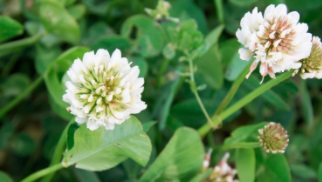
White Clover
White clover is a broadleaf perennial that was at one time used in grass seed mixtures. It’s also known as white Dutch clover because of its three-lobed leaves with a crescent-shaped white border. The plant grows by creeping stems and thrives on thin, undernourished grass with plenty of water.
Ground Ivy
Ground ivy is a broadleaf perennial with square stems and scalloped margins on its brilliant green spherical leaves. It reproduces by seed and creeping stems that root as soon as they meet the ground. It likes wet soil and shade and is sometimes known as creeping Charlie.
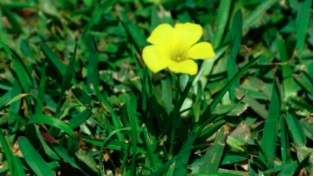
Yellow Wood Sorrel
Yellow wood sorrel is a broadleaf perennial that, in some areas, can behave as an annual. It features clover-like leaves and five-petaled yellow blooms and is also known as oxalis. Their roots and seeds spread the plants.
Nutsedges
Nutsedges are perennial weeds that mimic grasses on the surface but are thicker, stiffer, and V-shaped. Unlike the two stages of leaves found in grass leaves, nutsedge leaves form in three groups from the base.
They are one of the most troublesome weeds for vegetable crops, reducing harvest yields significantly. Purple nutsedge blooms have a reddish tint and dark brown or black seeds. However, yellow nutsedge flowers have a light brown tinge with the exact origins.
Spotted Surge
Spotted spurge is a fast-spreading broadleaf annual that grows close to the ground in a mat. It has green leaves with a brown-red patch on top. Cut stems exude a milky liquid.
Bindweed
Field bindweed, also known as perennial or wild morning-glory or creeping jenny, is a rough perennial vine with numerous names.
Bindweed differs from the beautiful annual morning-glory, which has a bigger and more spectacular bloom that is 2-inch in diameter and can range from white to blue or purple, as well as a thicker, occasionally hairy stem and heart-shaped leaves that are 12-inches wide and 2-inches or longer.
Canada Thistle
Despite its name, the Canada thistle is a poisonous, creeping perennial plant native to Eurasia. Seeds and white, creeping rootstocks that put up new shoots every eight to12-inches and propagate this plant.
It’s a colony-forming weed that reproduces asexually through rhizomatous roots, which means any portion of the root system that can produce new plants or sexually by wind-blown seed. Then, in mid-to-late spring, the plant emerges from its roots and has rosettes.
Chickweed
Chickweed is a thick mat-forming plant that seldom grows higher than
2-inches. The blooms have five white petals and are tiny. Common chickweed grows in a broad range of soils but performs best in neutral pH, high nitrogen soils but does poorly in low pH or acidic soils.
Annual Bluegrass
Poa annua, or annual meadow grass, also known as annual bluegrass or simply poa in the U.S., is a low-growing turf grass that grows widely in temperate regions. It has a fibrous, somewhat creeping rootstock. The stem can reach a height of 6 to 10-inches.
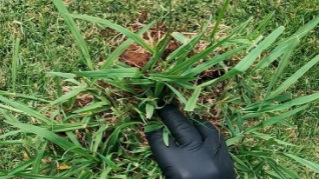
Dallis Grass
Dallis grass has solid and deep fibrous roots that spread from a short rhizome. The stems of the leaves are hollow and create a rough, spreading tuft, while the blade-shaped leaves grow up to 10-inches long. The leaf blades are hairless; however, the lower sheaths of the leaves are hairy.
As you know, weeds can wreak havoc on even the most well-kept lawns of your clients. Weed seeds drift in on the breeze, creeping weeds expand their area, and weeds you thought you had pulled carefully, come back. So, it’s better to have enough knowledge of these weeds for you to suggest treatment recommendations for your loyal customers that desire to have that perfect lawn.